Mexico City
From Cuicuilco and the island of Tenochtitlan to the capital of New Spain, the Federal District of 1824 and the vast metropolis renamed Mexico City in 2016.
Capital: the national capital · Checked 3 Nov 2026
Interactive maptap or click a state to open its page
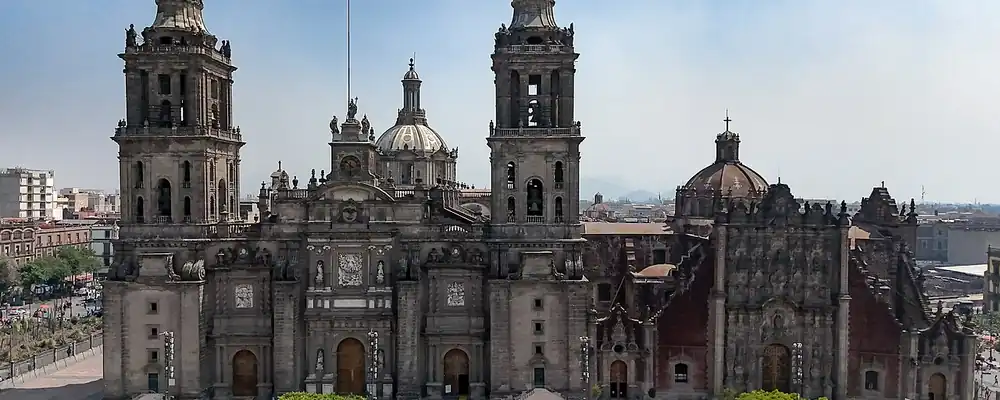
Mexico City in figures from its history
An island city on the lake
Long before the Mexica, people farmed the southern shore of the lake. Cuicuilco, settled about 1200 BCE, built a round stepped pyramid and may have held some 20,000 people. Lava from the Xitle volcano buried much of it in the early centuries CE; sources put the eruption anywhere from the 1st century BCE to about 400 CE. In the south, the Xochimilca settled around 900 CE and built chinampas, the floating fields of mud and reeds that still line the canals of Xochimilco.
Indigenous languages spoken today
Speakers aged 3 and over, census of 2020 7
125,153 people aged 3 and over spoke an Indigenous language in 2020 (1.4%). Most are migrants or children of migrants from other states; Milpa Alta and Xochimilco have the highest shares.
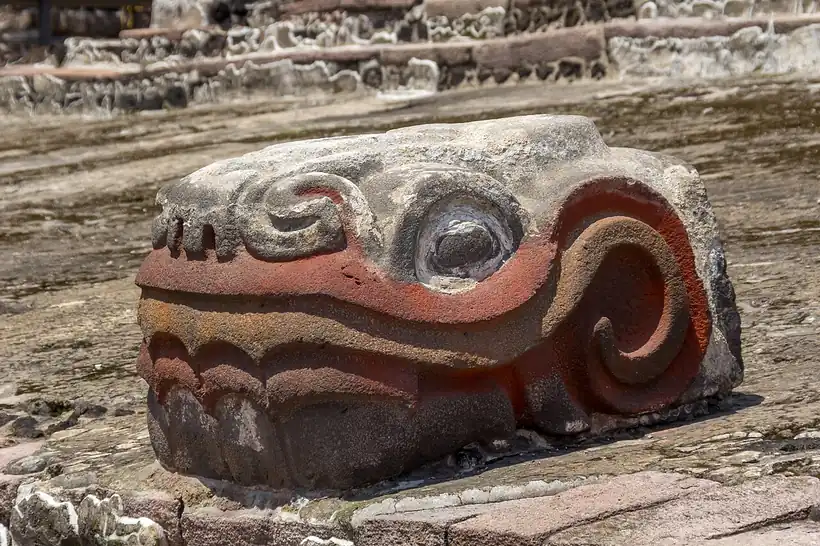

The Mexica founded Mexico-Tenochtitlan on an island in Lake Texcoco, traditionally in 1325, though some historians propose 1345. Their twin city, Tlatelolco, held the great market where Cortés counted some 60,000 buyers and sellers a day. With Texcoco and Tlacopan they formed the Triple Alliance in 1428 and built an empire from the island. The Templo Mayor was rebuilt 6 times over 2 centuries. When the Spanish arrived in 1519, estimates for the city run from 100,000 to 300,000 people. Nahuatl is still the most spoken Indigenous language in the capital, alongside Mazatec, Mixtec, Otomí and Zapotec brought by migrants from other states.
Capital of New Spain, fighting the water
Tenochtitlan fell on 13 Aug 1521 after a siege of nearly 3 months. Cortés chose to build the Spanish capital on the ruins, and surveyors laid out a grid of about 100 blocks over the old ceremonial centre. The viceroyalty of New Spain was created in 1535. The city became the seat of the viceroy, the archbishop, a university (1553) and, from 1594, the merchants' guild, the consulado, which ran the trade of silver out and goods in. Indigenous labour built it: in 1607 alone, 4,500 men were drafted to dig the drainage works, the desagüe.
Interactive maptap or click a state to open its page
Water was the city's long enemy, because the capital stood on a lakebed in a basin with no natural outlet. Floods struck in 1555, 1580, 1604 and 1607. The worst began on 21 Sep 1629 and the water stayed until 1634; one estimate counts some 30,000 dead. There was a serious proposal to move the capital to dry land, but property owners blocked it. The city grew slowly, to about 57,000 people in 1689, and a 1790 census counted 112,926. On the hill of Tepeyac, the shrine of the Virgin of Guadalupe, tied by tradition to 1531, became the centre of Mexican devotion; its basilica opened in 1709.
Places in its history
Zócalo and Templo Mayor
City · 1325-1521; capital since 1521
Heart of Tenochtitlan and of the Spanish capital built on top of it. 8
Cuicuilco
Archaeological site · c. 1200 BCE-150 CE
One of the valley's first cities, its round pyramid half buried by the Xitle lava. 9
Tlatelolco
Archaeological site · 1337; 1536; 1968
Twin city of Tenochtitlan with its great market; later a Franciscan college and the square of 1968. 10
Xochimilco canals
Archaeological site · c. 900 to today
Chinampa farming that fed the lake cities, a World Heritage Site since 1987. 11
Chapultepec
Battlefield · 13 Sep 1847
The castle stormed in the war with the USA, later Maximilian's residence. 12
Basilica of Guadalupe, Tepeyac
Mission · 1531; 1709; 1976
Mexico's great shrine, on the hill tied by tradition to the 1531 apparition. 13
Capital of a new republic
The Army of the Three Guarantees, Agustín de Iturbide's army of independence, entered the city on 27 Sep 1821, and the act of independence was signed the next day. On 18 Nov 1824 Congress set aside a circle of 2 leagues around the main square as the Federal District, seat of the federal powers. War came twice. In the war with the USA, the invading army won at Padierna in Aug 1847, stormed Chapultepec Castle on 13 Sep 1847, where the young cadets known as the Niños Héroes died, and entered the Zócalo the next day.
1810 to 1920 in Mexico City
From the timeline below, coloured by era
- 1821The Army of the Three Guarantees enters the city on 27 Sep. 3
- 1824Congress creates the Federal District on 18 Nov. 3
- 1847Invading troops in the war with the USA storm Chapultepec Castle on 13 Sep. 12
- 1867Juárez enters the capital on 15 Jul, ending the French Intervention. 3
- 1900The Gran Canal del Desagüe opens on 17 Mar to drain the valley. 3
- 1913The Decena Trágica, 10 days of fighting in the capital in Feb. 2
French troops took the city on 10 Jun 1863, and Maximilian made Chapultepec his residence. The republic returned when Juárez entered on 15 Jul 1867. During the Porfiriato, Porfirio Díaz's rule of 1876-1911, the old imperial avenue became the Paseo de la Reforma, lined with monuments, and on 17 Mar 1900 the Gran Canal del Desagüe opened to drain the valley at last. The Revolution reached the capital in Feb 1913, in the 10 days of fighting known as the Decena Trágica, which ended with the overthrow of President Francisco I. Madero. In 1928 the Federal District was reorganized into boroughs, and the old municipal councils were abolished.
Factories, the Metro and the great metropolis
In the 20th century the capital became the engine of national industry. The population went from 906,063 in 1921 to 3,050,442 in 1950 and 8,831,079 in 1980. A refinery opened in Azcapotzalco in 1933; after the oil expropriation of 18 Mar 1938 it passed to the nation and took that date as its name. By 1980 half of Mexico's industrial jobs were in the city. Water still shaped everything: from the late 19th century the city drew on the springs of Xochimilco, and pumping drained most of its canals.
The region, c. 1600 and today
What each state turned on, by the era table below; Mexico City outlined in gold.
Interactive maptap or click a state to open its page
c. 1600
Mexico City: Towns, farms and workshops of the old heartland
- Silver mining districts
- Towns, farms and workshops of the old heartland
- Ports, sugar and cacao
Today
Mexico City: Services and government
- Export manufacturing
- Oil and gas
- Tourism
- Services and government
The 1968 Olympic Games brought new stadiums, and the same year troops fired on students at Tlatelolco. The Metro opened in 1969. On 19 Sep 1985 an earthquake struck at 7:19 in the morning and brought down much of the centre. Recovery came with new rights: the historic centre and Xochimilco became World Heritage Sites in 1987, and in 1997 residents elected their own head of government for the first time. The refinery closed on 18 Mar 1991 because of air pollution.
The Federal District became Ciudad de México on 29 Jan 2016, with its own constitution ratified in 2017. On 19 Sep 2017, 32 years to the day after the 1985 disaster, a magnitude 7.1 earthquake centred in Puebla brought down at least 44 buildings in the city. The metropolis spilled far beyond its limits. On 21 Mar 2022 the Felipe Ángeles airport opened 35 km to the north, in the State of Mexico, and on 2 Feb 2026 the interurban train from Toluca reached Observatorio station. The city the Mexica built on an island, and the Spanish rebuilt on the lakebed, still lives with the water and the shaking ground beneath it.
Mexico City, date by date
Before the Spanish before 1519
- c. 1200 BCE
Farming villages take root at Cuicuilco on the southern shore of the lake. 9
- c. 900
The Xochimilca settle the south of the valley and build chinampas. 11
- 1325
The Mexica found Mexico-Tenochtitlan on an island in Lake Texcoco (traditional date; 1345 is also proposed). 3
- 1428
Tenochtitlan, Texcoco and Tlacopan form the Triple Alliance. 3
The colonial centuries 1519 to 1809
Independence and the Reform 1810 to 1875
The Porfiriato 1876 to 1910
- 1900
The Gran Canal del Desagüe opens on 17 Mar to drain the valley. 3
The Revolution 1910 to 1920
- 1913
The Decena Trágica, 10 days of fighting in the capital in Feb. 2
Modern Mexico after 1920
- 1938
The Azcapotzalco refinery passes to the nation with the oil expropriation of 18 Mar. 14
- 1969
The Metro opens. 1
- 1985
An earthquake on 19 Sep devastates the centre of the city. 1
- 1997
Residents elect their own head of government for the first time. 1
- 2016
The Federal District becomes Ciudad de México on 29 Jan 2016. 1
- 2017
A magnitude 7.1 earthquake on 19 Sep 2017 brings down at least 44 buildings in the city. 15
Where Mexico City stood: c. 1600, 1910 and today
Interactive maptap or click a state to open its page
c. 1600
Silver, the heartland and the frontier
Mexico City: Towns, farms and workshops of the old heartland
- Silver mining districts
- Towns, farms and workshops of the old heartland
- Ports, sugar and cacao
- Indigenous south: cochineal, maize, tribute
- Maya lands under encomienda or beyond Spanish rule
- Frontier: missions, presidios, independent peoples
1910
The Porfiriato at its height
Mexico City: The national capital
- Mining
- Oil
- Henequén
- Sugar and textile mills
- Haciendas: grain, pulque, cattle
- Export crops: coffee, tobacco, cacao, chicle, timber
- Steel, cotton and the railway north
- Ranching frontier
- The national capital
Today
What each state turns on now
Mexico City: Services and government
- Export manufacturing
- Oil and gas
- Tourism
- Farming and agro-exports
- Mining
- Ports and logistics
- Services and government
Why Mexico's own reading of what each state's economy turned on in that period, drawn from the sources listed in each state's room; a classification, not a measurement.
Today's numbers for Mexico City
Output, exports, jobs, wages and investment now, each with its source and date.
The bookBook 6, Where to Go in Mexico, chapter 16
Where to Go in Mexico: The Center, the corridor this state belongs to.
Why MexicoThe national timeline
The turning points of the whole country, each dated, each with its source.
Sources, each with its date
- Wikipedia (English), Mexico City, History section, 3 Nov 2026 · read 3 Nov 2026 · link
- Wikipedia (English), History of Mexico City, 3 Nov 2026 · read 3 Nov 2026 · link
- Wikipedia (Spanish), Ciudad de México, Historia section, 3 Nov 2026 · read 3 Nov 2026 · link
- Wikipedia (Spanish), Demografía de la Ciudad de México, census table (source INEGI), 3 Nov 2026 · read 3 Nov 2026 · link
- INEGI / 1910 census, Table VI, population of the federal entities in 1895, 1900 and 1910 (Universidad Veracruzana transcription), 1910 · read 3 Nov 2026 · link
- INEGI, 2020 Census main results for Ciudad de México, press release 98/21, 29 Jan 2021 · read 3 Nov 2026 · link
- SEPI Ciudad de México, Diversidad lingüística en la Ciudad de México, Table 3 (2020 Census data), 2021 · read 3 Nov 2026 · link
- Wikipedia (English), Templo Mayor, 3 Nov 2026 · read 3 Nov 2026 · link
- Wikipedia (English), Cuicuilco, 3 Nov 2026 · read 3 Nov 2026 · link
- Wikipedia (English), Tlatelolco (altepetl) and Plaza de las Tres Culturas, 3 Nov 2026 · read 3 Nov 2026 · link
- Wikipedia (English), Xochimilco, 3 Nov 2026 · read 3 Nov 2026 · link
- Wikipedia (English), Battle of Chapultepec and Chapultepec Castle, 3 Nov 2026 · read 3 Nov 2026 · link
- Wikipedia (English), Basilica of Our Lady of Guadalupe, 3 Nov 2026 · read 3 Nov 2026 · link
- Wikipedia (Spanish), Refinería 18 de Marzo, 3 Nov 2026 · read 3 Nov 2026 · link
- Wikipedia (English), 2017 Puebla earthquake, 3 Nov 2026 · read 3 Nov 2026 · link
- Wikipedia (English), Felipe Ángeles International Airport, 3 Nov 2026 · read 3 Nov 2026 · link
- Wikipedia (English), El Insurgente (Mexico City-Toluca interurban train), 3 Nov 2026 · read 3 Nov 2026 · link
Pictures
- Catedral Metropolitana de la Ciudad de México 1: ProtoplasmaKid, CC BY-SA 4.0, Wikimedia Commons · read 3 Nov 2026
- Templo Mayor 2015 020: Photograph by Mike Peel (www.mikepeel.net)., CC BY-SA 4.0, Wikimedia Commons · read 3 Nov 2026

Where the sources disagree
- Founding of Tenochtitlan: the codices Azcatitlan, Mexicanus and Mendoza, and Wikipedia (Spanish, 13 Mar), give 1325; 1345 is also proposed; Sigüenza y Góngora gave 18 Jul 1327. This page uses 1325 and mentions 1345.
- Population of Tenochtitlan in 1519: Wikipedia (English) gives at least 100,000, perhaps 200,000; Wikipedia (Spanish) gives about 300,000 and another estimate above 500,000. This page says 100,000 to 300,000.
- Entry of the Army of the Three Guarantees: Wikipedia (English, History of Mexico City) gives 21 Sep 1821; Wikipedia (Spanish) gives 27 Sep 1821. This page uses 27 Sep, the day before the Act of Independence.
- Abolition of municipalities: Wikipedia (English, Xochimilco) dates the reorganisation into boroughs to 1928; Wikipedia (Spanish, Ciudad de México) puts the suppression of municipal institutions in 1929. This page uses 1928.
Chihuahua
From the adobe city of Paquimé to the silver of Parral, the last days of Hidalgo, Villa's División del Norte and the border factories of Ciudad Juárez.
All 32 on the mapNext →Durango
Capital of the old Nueva Vizcaya, Durango grew from silver camps and an iron hill into a frontier of forests, Laguna cotton and the first rumblings of the Revolution.