← Seven eras, one countryEra 5 of 7 · 1910 to 1940

Revolution and rebuilding

Ten years of revolution that cost about a million lives, a Constitution written in the middle of the war, the Cristero War, a single party born of a murder, and Cárdenas, who handed out the land and nationalized the oil. This room gathers what our 32 state histories hold for the era, 55 dated events and 16 places.

Interactive maptap or click a state to open its page

AguascalientesBaja CaliforniaBaja California SurCampecheChiapasChihuahuaCoahuilaColimaDurangoGuanajuatoGuerreroHidalgoJaliscoMexico CityMichoacánMorelosNayaritNuevo LeónOaxacaPueblaQuerétaroQuintana RooSan Luis PotosíSinaloaSonoraState of MexicoTabascoTamaulipasTlaxcalaVeracruzYucatánZacatecasMexico CityMexicali · City · 1903Ensenada · Port · 1542; 1882Hidalgo del Parral · Mine · 1631Ciudad Juárez · City · 1659Torreón · Railway · 1893-1907Gómez Palacio · City · 1910Celaya · Battlefield · 1570; 1915Zacatepec · Hacienda · 1619; mill 1938Tepic · City · 1531Querétaro · City · 1531Ciudad del Maíz · City · 1920s-1939Ciudad Obregón · City · 1928Madero refinery · Oil field · 1914Matamoros · City · 1749; 1913Cerro Azul · Oil field · 1916Poza Rica · Oil field · 1932; town 1951
  • 0 dated events
  • 1 dated event
  • 2 dated events
  • 3 or more dated events
  • City
  • Port
  • Mine
  • Railway
  • Battlefield
  • Hacienda
  • Oil field
Click a state to open its history; hover a dot for its name and date.Tap a state to open its history.
  1. First peoplesBefore 1521
  2. New Spain1521 to 1810
  3. Independence, Reform and the lost north1810 to 1876
  4. The Porfiriato1876 to 1910
  5. Revolution and rebuilding1910 to 1940
  6. Growth under one party1940 to 1982
  7. The opening1982 to today
Date by date

The era in 20 dates

  1. 20 Nov 1910The date Francisco I. Madero's Plan of San Luis sets for a revolt against Porfirio Díaz. 1
  2. 21 May 1911The Treaty of Ciudad Juárez: Díaz resigns that month and goes into exile. 1
  3. Nov 1911Madero is sworn in as president; the same month Emiliano Zapata issues the Plan of Ayala, rising against him for the land the villages had lost. 1
  4. Feb 1913The Ten Tragic Days: generals of the old regime rise in Mexico City, Madero's own commander, Victoriano Huerta, turns on him, and Madero and his vice-president are murdered; Huerta rules until July 1914. 13
  5. Apr 1914USA marines and sailors seize Veracruz; 193 Mexican soldiers and 19 Americans die, with civilians uncounted. 1
  6. Oct 1914The winners meet at the Convention of Aguascalientes and fail to agree: Villa and Zapata on one side, Carranza and Obregón on the other. 1
  7. 6 to 15 Apr 1915At Celaya, Obregón's trenches and machine guns break Villa's cavalry charges. 1
  8. 9 Mar 1916Villa's men raid Columbus, New Mexico: 18 Americans and about 80 Villistas die. General Pershing leads some 5,000 USA troops into Mexico for nearly a year and does not catch him. 41
  9. 5 Feb 1917The Constitution is approved at Querétaro: secular public schooling (Article 3), land reform and the nation's ownership of the subsoil, oil included (Article 27), and the eight-hour day and the right to strike (Article 123). 2
  10. 10 Apr 1919Zapata is ambushed and killed by agents of President Carranza. 1
  11. 21 May 1920Carranza, fleeing the capital, is killed as he sleeps at Tlaxcalantongo, Puebla; Álvaro Obregón is elected president that year. 31
  12. 20 Jul 1923Villa is shot dead in an ambush in Parral, Chihuahua. 4
  13. 3 Aug 1926The Cristero War begins, days after the Calles Law on religion takes effect; it ends with the agreements of 21 June 1929. 6
  14. Jul 1928President-elect Obregón is assassinated, and the crisis that follows leads to a single official party. 7
  15. 4 Mar 1929Plutarco Elías Calles founds the National Revolutionary Party (PNR); under its later names it holds the presidency until 2000. 7
  16. 1 Dec 1934Lázaro Cárdenas is sworn in as president; in 1935 he breaks with Calles, and in April 1936 he has him deported to the USA. 810
  17. 1934 to 1940Cárdenas hands some 18 million hectares (180,000 km²) of hacienda land to peasants, more than five times what Calles distributed. 89
  18. 18 Mar 1938Cárdenas nationalizes the oil; Pemex, the state oil company, is created the same year. 8
  19. 30 Mar 1938The official party is remade as the Party of the Mexican Revolution (PRM), built on four sectors: peasants, workers, the army and the popular sector. 87
  20. 1939Mexico takes in some 20,000 to 40,000 Spanish Republican refugees. 8
The story

What happened, and what is still argued

How much land did the Revolution hand out? Land distributed to villages and peasants, by presidency, millions of hectares
Álvaro Obregón, 1920 to 19241.7 million ha
Plutarco Elías Calles, 1924 to 19283.2 million ha
Lázaro Cárdenas, 1934 to 1940about 18 million ha

Cárdenas: more than five times what Calles distributed. No figure for 1928 to 1934 in our sources, so those years are left out, not guessed.

Sources: 98

Data table
PresidencyMillion haAs the source gives it
Álvaro Obregón, 1920 to 19241.71.3% of agricultural land
Plutarco Elías Calles, 1924 to 19283.22.4% of agricultural land
Lázaro Cárdenas, 1934 to 194018180,000 km², 45 million acres

Download CSV

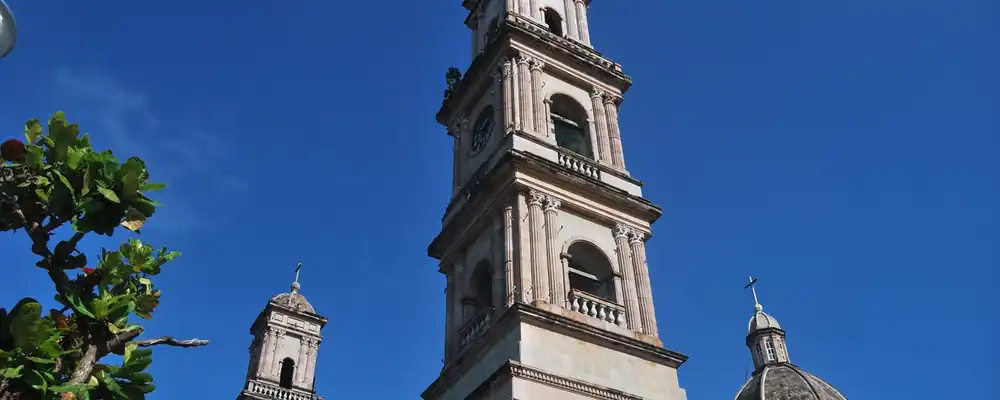
Tampico Cathedral
Tampico Cathedral Tampico was the Gulf port that shipped the oil of the 1910s and 1920s, when the wells were in foreign hands; the 1938 expropriation made them the nation's. Photo: Jesus Eduardo Arteaga Flores, CC BY-SA 3.0, via Wikimedia Commons

From one man's fall to ten years of war

Díaz fell fast: Madero called for revolt in November 1910 and Díaz was gone by May 1911. Ending the war took a decade. Zapata broke with Madero within weeks over land; in February 1913 Madero's own commander, Huerta, turned on him and Madero was murdered; Carranza, Villa, Zapata and Obregón united against Huerta and then fought one another after 1914.

Wikipedia puts the toll at around one million dead, mostly non-combatants. The USA took Veracruz in 1914 and chased Villa through Chihuahua in 1916 without catching him.

Sources: 14

The soldaderas

Women marched with every army, as camp followers, as soldiers and as officers. When one federal general crossed into the USA, 1,256 women and 554 children were interned at Fort Bliss beside 3,357 officers and men.

Petra Herrera fought for Villa disguised as a man named Pedro, left when she was denied credit for the siege of Torreón, and formed her own unit of women. Amelio Robles Ávila was a Zapatista colonel from 1913 to 1918 and lived as a man.

Sources: 5

The Constitution of 1917

Written at Querétaro while the war went on, the Constitution answered the men who had fought: secular public schools in Article 3, land for the villages and the nation's ownership of everything under the ground in Article 27, and the eight-hour day and the right to strike in Article 123.

Article 27 is the one that would matter most to the economy. It made the oil Mexico's, which is how a president could expropriate it twenty-one years later.

Sources: 2

The Cristeros and one party

When Calles enforced the religious articles in 1926, Catholics in the centre-west took up arms. The Cristero War lasted until June 1929 and cost about 90,000 lives; by some estimates as much as 5% of the population went north to the USA.

In July 1928 Obregón, just elected again, was murdered. Calles's answer was a party: the PNR of March 1929, which gathered the revolution's factions into one machine and, as the PRM and then the PRI, kept the presidency for 71 years.

Sources: 67

Cárdenas: land, oil and the party remade

Cárdenas broke with Calles in 1935, had him deported in April 1936, and did what the Constitution had promised. He broke up large commercial haciendas and handed some 18 million hectares to peasants, mostly as ejidos, more than five times what Calles had distributed.

On 18 March 1938 he nationalized the oil held by foreign companies and created Pemex; on 30 March the party became the PRM, built on four sectors. He also opened Mexico to some 20,000 to 40,000 refugees from the Spanish Republic. He handed over power in December 1940.

Sources: 8910

In the states

All 55 dated events of the era in our 32 state histories

Where and when did it happen? One of the 32 records no dated event in this era. One dot per dated event, one row per state, coloured by corridor; hover a dot to read it

Slide the chart to see all of it →

The Texas-Facing NorthThe Pacific BorderThe Bajío and Center-NorthThe CenterThe WestThe Gulf and the IsthmusThe PeninsulaThe Deep South: Guerrero, Oaxaca and Chiapas
1910191519201925193019351940ChihuahuaChihuahua · 1911: Orozco and Villa take Ciudad Juárez; the treaty of 21 May ends Díaz's rule.Chihuahua · 1922: About 3,000 Mennonites from Canada settle the Bustillos Valley.Chihuahua · 1923: Pancho Villa is killed in Parral on 20 Jul.CoahuilaCoahuila · 1913: Venustiano Carranza proclaims the Plan de Guadalupe on 26 Mar.Coahuila · 1936: The Cárdenas land reform hands La Laguna's estates to about 300 ejidos.Nuevo LeónNuevo León · 1914-15: Carrancistas and Villistas, rival revolutionary armies, fight for control of Monterrey.TamaulipasTamaulipas · 1913: Lucio Blanco divides Hacienda Los Borregos on 30 Aug, the first land distribution of the Revolution.Tamaulipas · 1914: El Águila opens its refinery at what is now Ciudad Madero.Tamaulipas · 1938: The oil expropriation puts Tampico's industry in national hands.Baja CaliforniaBaja California · 1911: Magonista rebels hold Mexicali and Tijuana before federal troops return.Baja California · 1928: The Agua Caliente resort opens in Tijuana in the Prohibition years.Baja California · 1937: The Asalto a las Tierras returns the Mexicali Valley's farmland to Mexican farmers.Baja California SurBaja California Sur · 1914: Local revolutionary troops take La Paz.Baja California Sur · 1931: The Southern Territory of Baja California is formally set apart from the north.SonoraSonora · 1920: The Plan of Agua Prieta opens the era of the Sonoran presidents.AguascalientesAguascalientes · 1914: The revolutionary Convention meets at the Morelos Theatre, 10 Oct to 9 Nov.Aguascalientes · 1927-28: The Presa Calles is built as Irrigation System No. 1.DurangoDurango · 1910: On 19 Nov Gómez Palacio sees the state's first revolutionary rising.Durango · 1913: Insurgents take the capital on 18 Jun.Durango · 1936: Lázaro Cárdenas expropriates 225 haciendas in La Laguna to form ejidos.GuanajuatoGuanajuato · 1915: Obregón defeats Villa in the battles of Celaya in Apr.QuerétaroQuerétaro · 1917: The Constitution of Mexico is proclaimed in Querétaro on 5 Feb.San Luis PotosíSan Luis Potosí · 1910: Madero dates the Plan of San Luis on 5 Oct and calls for the rising of 20 Nov.San Luis Potosí · 1938-39: Saturnino Cedillo's revolt against the federal government is put down.ZacatecasZacatecas · 1914: On 23 Jun the División del Norte takes the city in the bloodiest battle of the campaign against Huerta.HidalgoHidalgo · 1920: The first airmail flight carries 543 letters from Pachuca to Mexico City in 53 minutes.Mexico CityMexico City · 1913: The Decena Trágica, 10 days of fighting in the capital in Feb.Mexico City · 1938: The Azcapotzalco refinery passes to the nation with the oil expropriation of 18 Mar.MorelosMorelos · 1911: Zapata proclaims the Plan de Ayala on 28 Nov.Morelos · 1919: Zapata is killed at the hacienda of Chinameca on 10 Apr.Morelos · 1938: Cárdenas opens the Zacatepec sugar mill on 5 Feb.PueblaPuebla · 1910: The attack on the Serdán house on 18 Nov opens the Revolution in Puebla.Puebla · 1920: Venustiano Carranza is killed at Tlaxcalantongo, in the Sierra Norte.State of MexicoState of Mexico · 1915: Toluca hosts the Convention of revolutionary generals and governors.TlaxcalaTlaxcala · 1910: Anti-reelectionists led by Juan Cuamatzi plan a rising for 26 May.ColimaColima · 1919: A salt workers' cooperative receives sole rights to Cuyutlán lagoon.JaliscoJalisco · 1926-29: The Cristero War makes Jalisco one of its main battlegrounds.MichoacánMichoacán · 1928-32: Governor Lázaro Cárdenas ends the Cristero fighting and begins land reform.NayaritNayarit · 1917: The new Constitution makes the territory the state of Nayarit.SinaloaSinaloa · 1910: Gabriel Leyva Solano rises for Madero on 2 Jun and is killed on 13 Jun.Sinaloa · 1916: Work begins on the Rosales canal, the first irrigation works in the Culiacán valley.TabascoTabasco · 1931: Governor Tomás Garrido Canabal decrees prohibition on 30 Apr.VeracruzVeracruz · 1914: USA forces occupy the port from 21 Apr to 23 Nov.Veracruz · 1916: Cerro Azul No. 4 flows 260,000 barrels a day, the world's largest gusher.Veracruz · 1938: President Lázaro Cárdenas expropriates the foreign oil companies on 18 Mar.CampecheCampeche · 1914: Decree No. 6 abolishes disguised slavery on the haciendas.Campeche · 1939-43: Chicle supplies about 60% of the state budget.Quintana RooQuintana Roo · 1931-35: The territory is divided between Yucatán and Campeche, then restored.YucatánYucatán · 1916: Mérida hosts Mexico's first feminist congress under Salvador Alvarado.Yucatán · 1924: Governor Felipe Carrillo Puerto is shot by firing squad in Mérida on 3 Jan.Yucatán · 1937: Lázaro Cárdenas turns the henequen haciendas into collective ejidos.ChiapasGuerreroGuerrero · 1929: William Spratling finds Taxco and soon opens his silver workshops.Guerrero · 1933: Hotel El Mirador opens on the cliffs of La Quebrada, Acapulco.OaxacaOaxaca · 1915: On 3 Jun 1915 the legislature declares that Oaxaca reassumes its sovereignty.Oaxaca · 1932: Alfonso Caso finds the treasure of Tomb 7 at Monte Albán.

The full list, oldest first. Each state name opens its history, where the event carries its source.

See all 55 events
  1. 1910DurangoOn 19 Nov Gómez Palacio sees the state's first revolutionary rising.
  2. 1910PueblaThe attack on the Serdán house on 18 Nov opens the Revolution in Puebla.
  3. 1910San Luis PotosíMadero dates the Plan of San Luis on 5 Oct and calls for the rising of 20 Nov.
  4. 1910SinaloaGabriel Leyva Solano rises for Madero on 2 Jun and is killed on 13 Jun.
  5. 1910TlaxcalaAnti-reelectionists led by Juan Cuamatzi plan a rising for 26 May.
  6. 1911Baja CaliforniaMagonista rebels hold Mexicali and Tijuana before federal troops return.
  7. 1911ChihuahuaOrozco and Villa take Ciudad Juárez; the treaty of 21 May ends Díaz's rule.
  8. 1911MorelosZapata proclaims the Plan de Ayala on 28 Nov.
  9. 1913CoahuilaVenustiano Carranza proclaims the Plan de Guadalupe on 26 Mar.
  10. 1913DurangoInsurgents take the capital on 18 Jun.
  11. 1913Mexico CityThe Decena Trágica, 10 days of fighting in the capital in Feb.
  12. 1913TamaulipasLucio Blanco divides Hacienda Los Borregos on 30 Aug, the first land distribution of the Revolution.
  13. 1914AguascalientesThe revolutionary Convention meets at the Morelos Theatre, 10 Oct to 9 Nov.
  14. 1914Baja California SurLocal revolutionary troops take La Paz.
  15. 1914CampecheDecree No. 6 abolishes disguised slavery on the haciendas.
  16. 1914-15Nuevo LeónCarrancistas and Villistas, rival revolutionary armies, fight for control of Monterrey.
  17. 1914TamaulipasEl Águila opens its refinery at what is now Ciudad Madero.
  18. 1914VeracruzUSA forces occupy the port from 21 Apr to 23 Nov.
  19. 1914ZacatecasOn 23 Jun the División del Norte takes the city in the bloodiest battle of the campaign against Huerta.
  20. 1915GuanajuatoObregón defeats Villa in the battles of Celaya in Apr.
  21. 1915OaxacaOn 3 Jun 1915 the legislature declares that Oaxaca reassumes its sovereignty.
  22. 1915State of MexicoToluca hosts the Convention of revolutionary generals and governors.
  23. 1916SinaloaWork begins on the Rosales canal, the first irrigation works in the Culiacán valley.
  24. 1916VeracruzCerro Azul No. 4 flows 260,000 barrels a day, the world's largest gusher.
  25. 1916YucatánMérida hosts Mexico's first feminist congress under Salvador Alvarado.
  26. 1917NayaritThe new Constitution makes the territory the state of Nayarit.
  27. 1917QuerétaroThe Constitution of Mexico is proclaimed in Querétaro on 5 Feb.
  28. 1919ColimaA salt workers' cooperative receives sole rights to Cuyutlán lagoon.
  29. 1919MorelosZapata is killed at the hacienda of Chinameca on 10 Apr.
  30. 1920HidalgoThe first airmail flight carries 543 letters from Pachuca to Mexico City in 53 minutes.
  31. 1920PueblaVenustiano Carranza is killed at Tlaxcalantongo, in the Sierra Norte.
  32. 1920SonoraThe Plan of Agua Prieta opens the era of the Sonoran presidents.
  33. 1922ChihuahuaAbout 3,000 Mennonites from Canada settle the Bustillos Valley.
  34. 1923ChihuahuaPancho Villa is killed in Parral on 20 Jul.
  35. 1924YucatánGovernor Felipe Carrillo Puerto is shot by firing squad in Mérida on 3 Jan.
  36. 1926-29JaliscoThe Cristero War makes Jalisco one of its main battlegrounds.
  37. 1927-28AguascalientesThe Presa Calles is built as Irrigation System No. 1.
  38. 1928Baja CaliforniaThe Agua Caliente resort opens in Tijuana in the Prohibition years.
  39. 1928-32MichoacánGovernor Lázaro Cárdenas ends the Cristero fighting and begins land reform.
  40. 1929GuerreroWilliam Spratling finds Taxco and soon opens his silver workshops.
  41. 1931Baja California SurThe Southern Territory of Baja California is formally set apart from the north.
  42. 1931-35Quintana RooThe territory is divided between Yucatán and Campeche, then restored.
  43. 1931TabascoGovernor Tomás Garrido Canabal decrees prohibition on 30 Apr.
  44. 1932OaxacaAlfonso Caso finds the treasure of Tomb 7 at Monte Albán.
  45. 1933GuerreroHotel El Mirador opens on the cliffs of La Quebrada, Acapulco.
  46. 1936CoahuilaThe Cárdenas land reform hands La Laguna's estates to about 300 ejidos.
  47. 1936DurangoLázaro Cárdenas expropriates 225 haciendas in La Laguna to form ejidos.
  48. 1937Baja CaliforniaThe Asalto a las Tierras returns the Mexicali Valley's farmland to Mexican farmers.
  49. 1937YucatánLázaro Cárdenas turns the henequen haciendas into collective ejidos.
  50. 1938Mexico CityThe Azcapotzalco refinery passes to the nation with the oil expropriation of 18 Mar.
  51. 1938MorelosCárdenas opens the Zacatepec sugar mill on 5 Feb.
  52. 1938-39San Luis PotosíSaturnino Cedillo's revolt against the federal government is put down.
  53. 1938TamaulipasThe oil expropriation puts Tampico's industry in national hands.
  54. 1938VeracruzPresident Lázaro Cárdenas expropriates the foreign oil companies on 18 Mar.
  55. 1939-43CampecheChicle supplies about 60% of the state budget.
What this room does not settle

Where the sources disagree

  • The Revolution's toll: around one million deaths, mostly non-combatants, in Wikipedia's summary; it is an estimate, not a count. 1
  • The Cristero War's dead: about 90,000 in the article's text (56,882 federal soldiers and 30,000 Cristeros, plus civilians); the summary box gives 30,000 to 50,000 Cristeros. 6
  • Cárdenas's land: given as 45 million acres in one article and 180,000 km² in another (both about 18 million hectares). No figure is given for the presidencies of 1928 to 1934, so the chart leaves them out rather than guess. 98
  • Calles's exile: the Cárdenas article says 1935, the year of the break; Calles was deported in April 1936. 810
  • The 1917 Constitution: approved on 5 February 1917 at Querétaro; the Revolution article says only February. 21
  • Madero's death: the article says he and his vice-president were killed days after the February 1913 coup, without giving the day. 1
Sources, each with its date

Wikipedia first, then the sources it cites; the state events carry their own sources on each state page.

  1. Wikipedia (English), Mexican Revolution · read 5 Nov 2026 · link
  2. Wikipedia (English), Constitution of Mexico · read 5 Nov 2026 · link
  3. Wikipedia (English), Venustiano Carranza · read 5 Nov 2026 · link
  4. Wikipedia (English), Pancho Villa · read 5 Nov 2026 · link
  5. Wikipedia (English), Soldaderas · read 5 Nov 2026 · link
  6. Wikipedia (English), Cristero War · read 5 Nov 2026 · link
  7. Wikipedia (English), Institutional Revolutionary Party · read 5 Nov 2026 · link
  8. Wikipedia (English), Lázaro Cárdenas · read 5 Nov 2026 · link
  9. Wikipedia (English), Land reform in Mexico · read 5 Nov 2026 · link
  10. Wikipedia (English), Plutarco Elías Calles · read 5 Nov 2026 · link

Picture