Nuevo León
From the carved rocks of desert hunters to the foundries and breweries of Monterrey, Nuevo León turned a poor frontier kingdom into Mexico's industrial north.
Capital: Monterrey · Became a state: 1824 · Checked 3 Nov 2026
Interactive maptap or click a state to open its page
Nuevo León in figures from its history
Hunters, gatherers and the carved rocks of the sierra
Before the Spanish arrived, the land that became Nuevo León belonged to many small nomadic peoples. Historians estimate some 250 distinct groups. The Spanish lumped them together as Chichimecas, and chroniclers called them rayados, borrados or pintados for the colours they painted on their bodies. Archaeologists identify four main clusters: Coahuiltecans in the west, Alazapas in the north, Borrados in the east and Guachichiles in the south. They lived by hunting and gathering, moved between temporary camps called rancherías, and had no lords or cities of the kind found further south.
Indigenous languages spoken today
Speakers aged 3 and over, census of 2020 2
In all, 77,945 people aged 3 and over spoke an Indigenous language in 2020, 1.42% of that age group (INEGI). Counts by language are as the Spanish Wikipedia gives them from the 2020 census; INEGI's own summary puts Nahuatl at 59.3% and Tének (Huastec) at 21.8% of speakers.

They left a deep record. At Boca de Potrerillos, in the municipality of Mina, more than 4,000 engraved rocks have been registered since 2005, carrying an estimated 8,000 to 10,000 images. Hearths there have been carbon-dated from 6960 BCE to 1760 CE. The finds point to knowledge of the sky, trade with groups as far away as the Gulf coast, fine stone tools and the medicinal use of plants. Little is known of their speech, which was probably Coahuilteco. The Indigenous languages counted in the state in 2020 are mostly those of peoples from other regions, led by Nahuatl and Tének.
A poor kingdom at the edge of New Spain
Spanish entry began in 1577 with the San Gregorio mines at today's Cerralvo, in a sierra rich in silver and lead, and with Santa Lucía, where Monterrey now stands. Luis Carvajal y de la Cueva won from Philip II the right to settle a New Kingdom of León, and in Apr 1582 he founded its capital, Ciudad de León, at Cerralvo; on the site of Santa Lucía his captain Gaspar Castaño de Sosa set up the Villa de San Luis. Carvajal's men raided the nomadic peoples for slaves. The Carvajal family were conversos, Christians of Jewish descent. The Inquisition convicted him of concealing his relatives' Jewish practice, and he died in prison on 13 Feb 1591; his nephew Luis de Carvajal was burned at the stake in 1596. Two earlier settlements failed before Monterrey's founding in 1596 lasted: on 20 Sep 1596 Diego de Montemayor and a dozen or so families founded the Ciudad Metropolitana de Nuestra Señora de Monterrey.
Interactive maptap or click a state to open its page
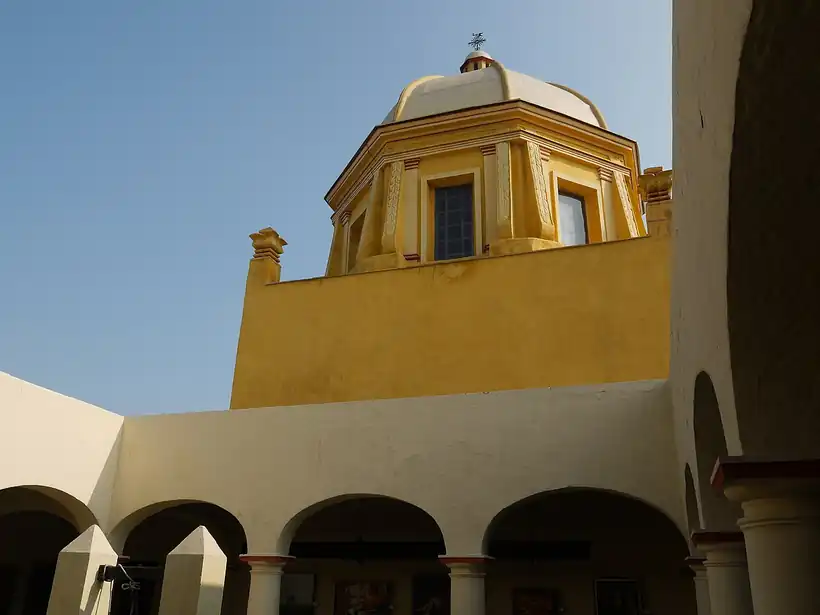
The kingdom stayed poor and isolated. Farming and ranching fed the settlers, with little left to sell. Spanish slave raids on the nomadic peoples provoked long wars and emptied the land of its first inhabitants. Tlaxcalan families came north from Saltillo to found frontier towns such as San Miguel de Aguayo, now Bustamante, in 1686, and about 20 missions were founded. Linares, founded in 1712, became an early sugar-cane producer of the north and in 1777 the seat of a bishop. In 1787-88 Bishop Rafael José Verger built the hilltop palace known as the Obispado. By 1790 criollos, people of Spanish descent born in the Americas, made up 63% of the population. There had been no large settled Indigenous population to work the land, and the nomadic peoples had been destroyed by slave raids and disease, so the region grew by migration.
Places in its history
Monterrey
City · 1596
State capital, founded on 20 Sep 1596 after Santa Lucía and the Villa de San Luis. 7
Boca de Potrerillos
Archaeological site · c. 6960 BCE-1760 CE
Thousands of engraved rocks left by hunter-gatherers over some 8,000 years. 6
Cerralvo (San Gregorio mines)
Mine · 1577; 1582
San Gregorio mines, opened in 1577; site of Carvajal's Ciudad de León, capital of the kingdom, in 1582. 17
Bustamante (San Miguel de Aguayo)
Mission · 1686
Tlaxcalan frontier town founded by 16 families from Saltillo. 11
Obispado (Bishop's Palace)
Battlefield · 1787-88 / 1846
Palace and stronghold: bishop's palace of 1787-88, a key position in the Battle of Monterrey, 1846. 15
Insurgents, Vidaurri and the border customs
News of Hidalgo's call reached the kingdom on 29 Sep 1810. Governor Manuel de Santa María went over to the insurgents in Jan 1811, but royalists under Joaquín de Arredondo crushed the rising, and Monterrey's council held to Spain until Jul 1821. Monterrey-born Fray Servando Teresa de Mier sat in the congress that wrote the 1824 Constitution, Nuevo León became a state that year, and its first constitution followed on 5 Mar 1825. In Sep 1846 an army from the USA under Zachary Taylor fought for 4 days to take Monterrey, with the Obispado among the key positions, and held the state until Jun 1848.
1810 to 1920 in Nuevo León
From the timeline below, coloured by era
- 1824Nuevo León becomes a state of the Mexican federation on 7 May. 1
- 1846Battle of Monterrey, 21-24 Sep; the city falls to Zachary Taylor's army. 16
- 1856-64Vidaurri joins Coahuila to Nuevo León until Juárez separates them. 1
- 1890The Cervecería Cuauhtémoc is founded in Monterrey. 7
- 1900The Fundidora de Monterrey is founded; it lights its first blast furnace in 1903. 23
- 1914-15Carrancistas and Villistas, rival revolutionary armies, fight for control of Monterrey. 1
Santiago Vidaurri seized power in 1855 and in 1856 joined Coahuila to Nuevo León. The border drawn on the Río Bravo in 1848 had put Monterrey close to the USA and far from Mexico City, and goods crossing that border paid duties at its customs houses; the revenue paid for public works, and the Confederate cotton trade during the American Civil War enriched the city's merchants. Juárez split the states again in Feb 1864 after Vidaurri refused him the customs money. Vidaurri later joined Maximilian's empire and was executed in 1867. Under Governor Bernardo Reyes (1885-87 and 1889-1909) the railway arrived, his government backed new industry, and merchants put their trade profits into factories: the Cuauhtémoc brewery in 1890, the Fundidora in 1900, Cementos Hidalgo in 1906, which merged in 1931 with Cementos Portland Monterrey to form Cemex, and the glassworks that became Vitro in 1909. The Carrancistas, Venustiano Carranza's Constitutionalist army, took Monterrey in Apr 1914 and, after an interlude under the Villistas, the followers of Pancho Villa, again in May 1915.
Steel, glass and the Sultan of the North
The founding families reinvested their profits in new plants and in banks. The Garza Sada and their kin built the brewery into Grupo Monterrey and later VISA, from which today's FEMSA descends, while Vitro and Cemex grew from the glass and cement works. Monterrey earned the names Sultan of the North and Mexico's industrial capital. The University of Nuevo León opened in 1933, and in 1943 Eugenio Garza Sada and other businessmen founded the Tecnológico de Monterrey to train engineers and managers. In 1936 the city's industrialists formed a united front against organised labour and Cárdenas's federal government during a strike at the glassworks. Factory work drew people from across the north: the state grew from 417,491 inhabitants in 1930 to 3,098,736 in 1990. In 1949 Molinos Azteca, the seed of Gruma, was founded in Cerralvo, the old mining town where the kingdom began.
The region, c. 1600 and today
What each state turned on, by the era table below; Nuevo León outlined in gold.
Interactive maptap or click a state to open its page
c. 1600
Nuevo León: Frontier: missions, presidios, independent peoples
- Silver mining districts
- Towns, farms and workshops of the old heartland
- Frontier: missions, presidios, independent peoples
Today
Nuevo León: Export manufacturing
- Export manufacturing
- Tourism
- Mining
The century had hard turns too. Pemex began building the Cadereyta refinery in 1973. On 17 Sep 1973 Eugenio Garza Sada, the central figure of the founding industrial families, was killed in a failed kidnapping by the guerrilla Liga Comunista 23 de Septiembre. Without him the group split in 1974 into separate holdings: VISA kept the brewery, Alfa took the Hylsa steelworks founded in 1943, and Vitro and Cydsa went their own way. The Fundidora, considered Latin America's first steel mill, went bankrupt in May 1986, and its grounds became Fundidora Park. With NAFTA in 1994, the state's export factories tied Nuevo León's economy ever more closely to Texas and the USA market.
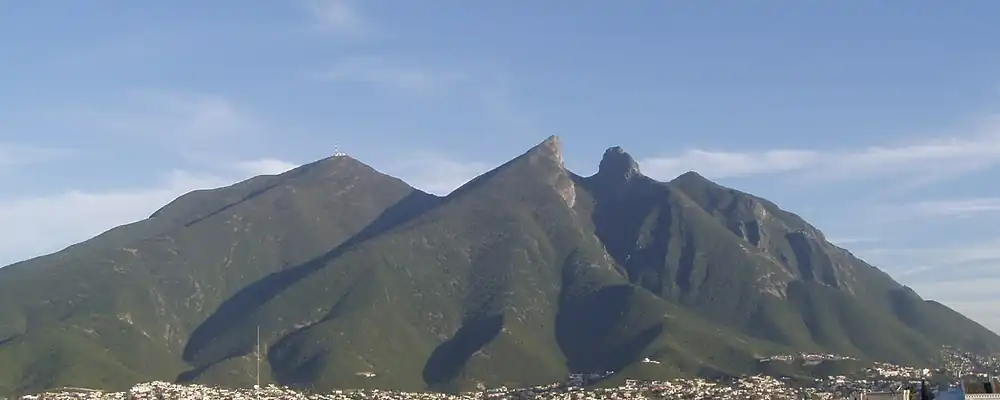
By the 2020 census the Monterrey metropolitan area, with 5,341,177 people, was Mexico's second largest. Kia began building cars at Pesquería in 2016, before the nearshoring wave of the 2020s brought more companies closer to the USA market. Tesla announced a gigafactory near Monterrey in Mar 2023 and put its construction on hold in Jul 2024. In the summer of 2022 a severe drought cut off the city's water for weeks in some districts. Under the Cerro de la Silla, the saddle-shaped mountain that is the city's emblem, the industrial capital of the north still runs on what its founders built a century ago: Mexican capital, technical schools and the road to the border.
Nuevo León, date by date
Before the Spanish before 1519
- c. 6960 BCE
Oldest dated hearth at Boca de Potrerillos, a site used for some 8,000 years. 6
The colonial centuries 1519 to 1809
- 1577
Spanish settlers open the San Gregorio mines at Cerralvo and found Santa Lucía, on the site of Monterrey. 3
- 1582
Luis Carvajal y de la Cueva founds Ciudad de León, at Cerralvo, as capital of the New Kingdom of León. 17
- 1596
Diego de Montemayor and a dozen or so families found Monterrey on 20 Sep. 7
- 1637
Founding of Cadereyta on 13 Aug. 14
- 1686
Tlaxcalan families from Saltillo found San Miguel de Aguayo, today's Bustamante. 11
- 1712
Founding of the Villa de San Felipe de Linares, later a bishop's seat and sugar town. 13
- 1787-88
Bishop Rafael José Verger builds the Obispado palace above Monterrey. 15
Independence and the Reform 1810 to 1875
The Porfiriato 1876 to 1910
The Revolution 1910 to 1920
- 1914-15
Carrancistas and Villistas, rival revolutionary armies, fight for control of Monterrey. 1
Modern Mexico after 1920
- 1943
Eugenio Garza Sada and other businessmen found the Tecnológico de Monterrey. 21
- 1949
Molinos Azteca, the seed of Gruma, is founded in Cerralvo. 9
- 1986
The Fundidora goes bankrupt in May; its land later becomes a park. 8
- 1994
NAFTA takes effect and reinforces the state's export manufacturing. 1
- 2023
Tesla announces a gigafactory near Monterrey in Mar; construction is put on hold in Jul 2024. 28
Where Nuevo León stood: c. 1600, 1910 and today
Interactive maptap or click a state to open its page
c. 1600
Silver, the heartland and the frontier
Nuevo León: Frontier: missions, presidios, independent peoples
- Silver mining districts
- Towns, farms and workshops of the old heartland
- Ports, sugar and cacao
- Indigenous south: cochineal, maize, tribute
- Maya lands under encomienda or beyond Spanish rule
- Frontier: missions, presidios, independent peoples
1910
The Porfiriato at its height
Nuevo León: Steel, cotton and the railway north
- Mining
- Oil
- Henequén
- Sugar and textile mills
- Haciendas: grain, pulque, cattle
- Export crops: coffee, tobacco, cacao, chicle, timber
- Steel, cotton and the railway north
- Ranching frontier
- The national capital
Today
What each state turns on now
Nuevo León: Export manufacturing
- Export manufacturing
- Oil and gas
- Tourism
- Farming and agro-exports
- Mining
- Ports and logistics
- Services and government
Why Mexico's own reading of what each state's economy turned on in that period, drawn from the sources listed in each state's room; a classification, not a measurement.
Today's numbers for Nuevo León
Output, exports, jobs, wages and investment now, each with its source and date.
The bookBook 6, Where to Go in Mexico, chapter 13
Where to Go in Mexico: The Texas-Facing North, the corridor this state belongs to.
Why MexicoThe national timeline
The turning points of the whole country, each dated, each with its source.
Sources, each with its date
- Wikipedia (English), Nuevo León, History section, 3 Nov 2026 · read 3 Nov 2026 · link
- Wikipedia (Spanish), Nuevo León, history and languages, 3 Nov 2026 · read 3 Nov 2026 · link
- Wikipedia (Spanish), Historia de Nuevo León, 3 Nov 2026 · read 3 Nov 2026 · link
- INEGI, Censo de Población y Vivienda 2020, results for Nuevo León, press release 40/21; percentage from INEGI's Panorama sociodemográfico de Nuevo León 2020, 26 Jan 2021 · read 3 Nov 2026 · link
- Tercer Censo de Población de los Estados Unidos Mexicanos, 1910, Table VI, population of the states in 1895, 1900 and 1910 (Universidad Veracruzana digital edition), 1910 · read 3 Nov 2026 · link
- Wikipedia (English), Boca de Potrerillos, 3 Nov 2026 · read 3 Nov 2026 · link
- Wikipedia (English), Monterrey, 3 Nov 2026 · read 3 Nov 2026 · link
- Wikipedia (English), Monterrey Foundry, 3 Nov 2026 · read 3 Nov 2026 · link
- Wikipedia (English), Cerralvo Municipality, 3 Nov 2026 · read 3 Nov 2026 · link
- Wikipedia (Spanish), Cerralvo, 3 Nov 2026 · read 3 Nov 2026 · link
- Wikipedia (English), Bustamante, Nuevo León, 3 Nov 2026 · read 3 Nov 2026 · link
- Wikipedia (English), Linares, Nuevo León, 3 Nov 2026 · read 3 Nov 2026 · link
- Wikipedia (Spanish), Linares (Nuevo León), 3 Nov 2026 · read 3 Nov 2026 · link
- Wikipedia (English), Cadereyta Jiménez, 3 Nov 2026 · read 3 Nov 2026 · link
- Wikipedia (English), Palacio del Obispado, 3 Nov 2026 · read 3 Nov 2026 · link
- Wikipedia (English), Battle of Monterrey, 3 Nov 2026 · read 3 Nov 2026 · link
- Wikipedia (English), Luis de Carvajal y de la Cueva, 3 Nov 2026 · read 3 Nov 2026 · link
- Wikipedia (English), Cemex, 3 Nov 2026 · read 3 Nov 2026 · link
- Wikipedia (English), Vitro, 3 Nov 2026 · read 3 Nov 2026 · link
- Wikipedia (English), Bernardo Reyes, 3 Nov 2026 · read 3 Nov 2026 · link
- Wikipedia (English), Eugenio Garza Sada, 3 Nov 2026 · read 3 Nov 2026 · link
- Wikipedia (Spanish), Universidad Autónoma de Nuevo León, 3 Nov 2026 · read 3 Nov 2026 · link
- Wikipedia (Spanish), Fundidora de Fierro y Acero de Monterrey, 3 Nov 2026 · read 3 Nov 2026 · link
- Michael Snodgrass, Deference and Defiance in Monterrey: Workers, Paternalism, and Revolution in Mexico, 1890-1950, Cambridge University Press, ch. 8 summary, 2003 · read 3 Nov 2026 · link
- Wikipedia (English), Santiago Vidaurri, 3 Nov 2026 · read 3 Nov 2026 · link
- Encyclopedia.com, Valores Industriales S.A. (company history: the 1974 split of the Monterrey Group; Hylsa), 3 Nov 2026 · read 3 Nov 2026 · link
- Just Auto, "Kia Motors officially opens new plant in Mexico", 8 Sep 2016 · read 3 Nov 2026 · link
- Wikipedia (English), Gigafactory Mexico, 3 Nov 2026 · read 3 Nov 2026 · link
Pictures
- Cerro de la Silla: Nathaniel C. Sheetz, CC BY-SA 3.0, Wikimedia Commons · read 3 Nov 2026
- Museo del Obispado - panoramio: JavierDo, CC BY-SA 3.0, Wikimedia Commons · read 3 Nov 2026

Where the sources disagree
- Statehood: Wikipedia (English) gives 7 May 1824; Wikipedia (Spanish) gives 5 Jul 1824. This page uses 7 May 1824.
- Cuauhtémoc brewery: Wikipedia (English, Nuevo León) lists it under 1900; Wikipedia (English, Monterrey) gives its founding as 1890. This page uses 1890.
- Linares: Wikipedia (English) gives 2 Apr 1712 and Wikipedia (Spanish) 10 Apr 1712, and the Spanish article names two different founders. This page gives the year only.
- Cerralvo: Wikipedia (English) credits Carvajal with the San Gregorio mines of 1577 and dates the renaming to 1630; Wikipedia (Spanish) credits Alberto del Canto and dates the presidio to 4 Sep 1626. This page gives the year 1577 without a founder.
- Battle of Monterrey: Wikipedia (English, Nuevo León) calls it a three-day battle from 21 Sep; the battle article dates it 21-24 Sep 1846. This page says 4 days.
- Nahuatl speakers: Wikipedia (Spanish) implies 57.7% of Indigenous-language speakers; INEGI's report gives 59.3%. This page gives both and uses INEGI for the share.
- Fundidora: Wikipedia (Spanish) gives 1900 for its founding and 1903 for its first blast furnace; Wikipedia (English, Nuevo León) dates it to 1904. This page uses 1900 and 1903.
- Cementos Hidalgo: Wikipedia (English, Cemex) gives 1906; Wikipedia (English, Nuevo León) gives 1905. This page uses 1906.
- Founding families of Monterrey: Wikipedia (English, Monterrey) says 13 families; Wikipedia (English, Nuevo León) says 12. This page says a dozen.
- Founding of Hylsa: Encyclopedia.com (Valores Industriales) gives 1943; Wikipedia (English, Eugenio Garza Sada) gives 1942. This page uses 1943.
Nayarit
From the Cora and Wixárika sierras and the island of Mexcaltitán to the shipyards of San Blas and the tobacco fields of the coast, Nayarit was the west's last frontier.
All 32 on the mapNext →Oaxaca
From Monte Albán and the Mixtec kingdoms to cochineal, Juárez and Díaz, Oaxaca kept its peoples and its languages through every century.