Coahuila
Desert hunters and lake peoples, Tlaxcalan settlers at Saltillo, a frontier that once included Texas, then cotton ejidos, coal and the steel of Monclova.
Capital: Saltillo · Became a state: 1824 · Checked 3 Nov 2026
Interactive maptap or click a state to open its page
Coahuila in figures from its history
Hunters of the desert and the lakes of La Laguna
People reached what is now Coahuila more than 12,000 years ago, settling near the Nazas and Aguanaval rivers in the south-west. That basin, La Laguna, once held about 13 lakes, the largest of them Mayrán. The peoples recorded there include the Paoquis, Caviseres, Ahomanes, Nauopas and Irritilas, whom the Spanish called Laguneros. In the desert ranges, people laid their dead in caves. In Jul 2025 archaeologists from INAH and CONANP found one such burial cave, reached by a shaft 50 cm wide, holding about 17 individuals in the manner of the burials at Candelaria Cave.
Indigenous languages spoken today
Speakers aged 3 and over, census of 2020 16
Coahuila has very few speakers of Indigenous languages: 5,527 people aged 3 and over in the 2020 census, 0.2% of that population, down from about 6,233 in 2010. The counts by language come from the census's extended sample, which estimates about 5,060 speakers in all.

These were hunting, gathering and fishing peoples who moved with water and seasons, and they never formed cities. Around Saltillo the land belonged to the Guachichiles. The name Coahuila is old and its meaning is debated: the historian Vito Alessio Robles read it as a place where serpents creep, while Tomás Zepeda's reading, a place where trees abound, is the most widely accepted and appears on the state's coat of arms. Few Indigenous languages are spoken today, because the region's original peoples did not survive the colonial wars and epidemics; most speakers now come from the south. The 2020 census counted 5,527 speakers aged 3 and over, 0.2% of that population and among the lowest shares in the country, most of them speaking Nahuatl, Tsotsil or Totonac.
Saltillo, the Tlaxcalans and the vineyards of Parras
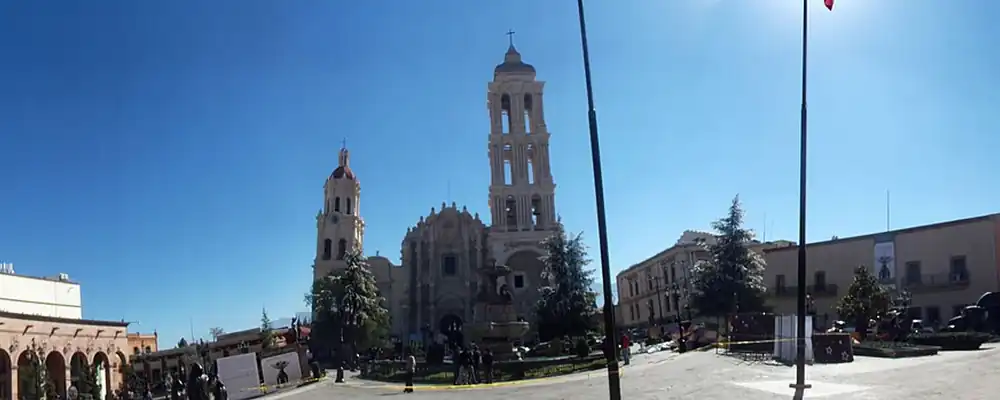
The Spanish came north decades after the fall of Tenochtitlan, slowed by a harsh climate and the lack of gold. On 25 Jul 1577 Alberto del Canto, commissioned by the governor of Nueva Vizcaya, founded the Villa de Santiago del Saltillo. Attacks by the Chichimecas, the nomadic peoples of the north, were so constant that by about 1587 only 20 Spaniards remained. In 1583 Luis de Carvajal founded Nueva Almadén where Monclova stands, but it was soon abandoned. The answer was settlers from the south. In Jul 1591, 71 families from Tlaxcala, the old Spanish allies of central Mexico, and 16 single men founded San Esteban de la Nueva Tlaxcala beside Saltillo, separated from it by an irrigation canal. They farmed, kept writing their wills in Nahuatl into the 18th century and, by tradition, brought the sarape that Saltillo is known for.
Interactive maptap or click a state to open its page
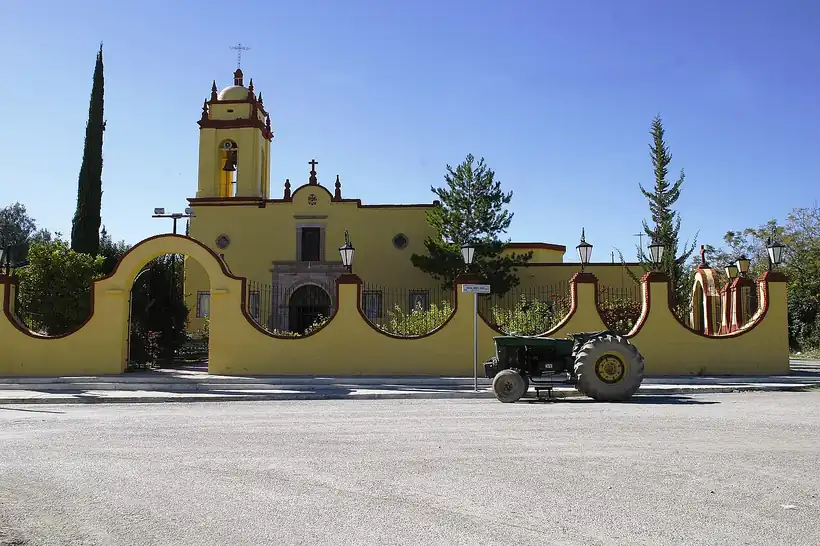
Tlaxcalan settlers also helped found Santa María de las Parras in 1598, under Captain Antón Martín de Zapata and the Jesuit Agustín de Espinoza. Its springs fed vineyards, and the winery founded there in Aug 1597, today Casa Madero, is the oldest in the Americas. Franciscan missionaries such as Fray Juan Larios pushed into the region; on 28 Jan 1675 they founded the mission of San Ildefonso de la Paz, and from 1692 to 1705 governor Gregorio de Salinas Varona multiplied the mission settlements. Monclova served as capital of the province, then called Nueva Extremadura.
Places in its history
Saltillo
City · 1577
Founded 25 Jul 1577, joined in 1591 by the Tlaxcalan town of San Esteban; state capital. 3
Parras de la Fuente
Hacienda · 1597-98
Founded on the old Hacienda del Rosario; vineyards since 1597; birthplace of Francisco I. Madero, 1873. 6
Monclova
City · 1577; steel 1942
Colonial capital of Nueva Extremadura; prison of the insurgent leaders in 1811; steel town from 1942. 4
Agua Nueva
Hacienda · 1811
Hacienda where Coahuila's royalist troops joined the insurgents on 7 Jan 1811. 2
Acatita de Baján
Battlefield · 1811
Where Hidalgo, Allende and the other insurgent leaders were captured in 1811. 2
Torreón
Railway · 1893-1907
Railway and cotton town of La Laguna, from about 200 people in 1892 to 34,000 in 1910. 5
Baján, the loss of Texas and the Plan de Guadalupe
On 7 Jan 1811, at the hacienda, or large estate, of Agua Nueva, about 700 royalist troops, loyal to Spain, under governor Antonio Cordero faced Mariano Jiménez's 8,000 insurgents fighting for Independence and went over to them. Weeks later, after the defeat at Puente de Calderón, the insurgent leaders rode north, and at Acatita de Baján Ignacio Elizondo and 492 men captured more than 600 of them, Hidalgo, Allende, Aldama, Jiménez and Abasolo among them. They were taken to Monclova and left for Chihuahua on 24 Mar 1811. In 1824 the new republic created Coahuila y Tejas. Anglo-American colonists, invited to settle the empty frontier, filled Texas, which broke away in 1836 after Santa Anna's centralist government abolished the federal system. On 22-23 Feb 1847, near Saltillo, Santa Anna's 15,142 men fought about 4,700 USA troops at La Angostura, known in English as Buena Vista; the result was indecisive and Santa Anna withdrew. In 1856 Santiago Vidaurri, the strongman of Nuevo León, annexed Coahuila to Nuevo León for several years.
1810 to 1920 in Coahuila
From the timeline below, coloured by era
- 1811At Agua Nueva on 7 Jan, Coahuila's royalist troops go over to the insurgents. 2
- 1811Hidalgo, Allende and other leaders are captured at Acatita de Baján and taken to Monclova. 2
- 1824Coahuila y Tejas becomes a state of the new federal republic. 1
- 1836Texas declares independence; the Treaties of Velasco follow on 14 May. 2
- 1847The battle of La Angostura, or Buena Vista, is fought near Saltillo on 22-23 Feb. 7
- 1856Santiago Vidaurri annexes Coahuila to Nuevo León on 19 Feb. 1
- 1873Francisco I. Madero is born in Parras. 6
- 1907Torreón, grown from about 200 people in 1892, is declared a city on 15 Sep. 5
- 1913Venustiano Carranza proclaims the Plan de Guadalupe on 26 Mar. 8
Large-scale coal mining, which began as the railways arrived in the late 19th century, drew people and capital to the region, and the population rose from 48,922 at mid-century to 296,938 in 1900. A railway to El Paso turned the ranch of Torreón into a cotton town of 34,000 by 1910. Coahuila gave the Revolution 2 of its leaders. Francisco I. Madero, who challenged Porfirio Díaz in 1910, was born in Parras in 1873, and governor Venustiano Carranza issued the Plan de Guadalupe on 26 Mar 1913, rejecting Victoriano Huerta and founding the Constitutionalist Army, the force of the Carrancistas, Carranza's revolutionary faction.
Cotton ejidos, coal and the Steel Capital
La Laguna was developed for large-scale irrigated cotton, and in 1936 it became the stage for one of the most publicised acts of the land reform. President Lázaro Cárdenas handed the estates to about 300 ejidos, communal farms granted under land reform, for some 30,000 campesinos, a distribution still marked every 6 Oct. Dams upstream, the Lázaro Cárdenas and the Francisco Zarco, tamed the Nazas and dried out the old lakes. Through the century La Laguna also became one of Mexico's most important milk regions, and by mid-century Torreón had grown into an industrial city of textiles, clothing and metals, home to the Peñoles silver refinery.
The region, c. 1600 and today
What each state turned on, by the era table below; Coahuila outlined in gold.
Interactive maptap or click a state to open its page
c. 1600
Coahuila: Frontier: missions, presidios, independent peoples
- Silver mining districts
- Towns, farms and workshops of the old heartland
- Frontier: missions, presidios, independent peoples
Today
Coahuila: Export manufacturing
- Export manufacturing
- Tourism
- Farming and agro-exports
- Mining
Its places in the modern era
Numbered as on the map above
- 6Torreón · 1893-1907
Railway and cotton town of La Laguna, from about 200 people in 1892 to 34,000 in 1910. 5
In 1942 Altos Hornos de México opened its steelworks at Monclova, near the coal of the Carbonífera, and the town grew into the country's Steel Capital. The Carbonífera region to the north supplied most of Mexico's coal, later feeding the Carbón I and II power plants at Nava. In the 1970s and 1980s the car industry arrived in Saltillo and Ramos Arizpe with General Motors and Chrysler, and border cities such as Piedras Negras filled with maquiladoras, export assembly plants, making auto parts and electronics.
After 2000 Saltillo and Ramos Arizpe remained a car-making centre. General Motors builds full-size pickups there, and Chrysler, part of Stellantis since 2021, runs truck, engine and transmission plants. Monclova went the other way. Altos Hornos de México, its steelworks since 1942, sank into crisis: its machines stood long idle and its workers went unpaid, and in Apr 2023 a court declared it bankrupt and its longtime head left the presidency. The arc that began with Tlaxcalan farmers at Saltillo, and ran through cotton in La Laguna and coal in the north, now runs through trucks built for North America.
Coahuila, date by date
Before the Spanish before 1519
- 12,000+ years ago
The first people settle near the Nazas and Aguanaval rivers, in what is now La Laguna. 10
The colonial centuries 1519 to 1809
- 1577
Alberto del Canto founds the Villa de Santiago del Saltillo on 25 Jul. 3
- 1583
Luis de Carvajal founds Nueva Almadén, at the site of Monclova; it is soon abandoned. 2
- 1591
71 Tlaxcalan families found San Esteban de la Nueva Tlaxcala beside Saltillo. 2
- 1597
A winery is founded at Parras in Aug, today Casa Madero, the oldest in the Americas. 6
- 1598
Antón Martín de Zapata and the Jesuit Agustín de Espinoza found Santa María de las Parras. 2
- 1675
Franciscans found the mission of San Ildefonso de la Paz on 28 Jan. 2
Independence and the Reform 1810 to 1875
- 1811
At Agua Nueva on 7 Jan, Coahuila's royalist troops go over to the insurgents. 2
- 1811
Hidalgo, Allende and other leaders are captured at Acatita de Baján and taken to Monclova. 2
- 1824
Coahuila y Tejas becomes a state of the new federal republic. 1
- 1836
Texas declares independence; the Treaties of Velasco follow on 14 May. 2
- 1847
The battle of La Angostura, or Buena Vista, is fought near Saltillo on 22-23 Feb. 7
- 1856
Santiago Vidaurri annexes Coahuila to Nuevo León on 19 Feb. 1
- 1873
Francisco I. Madero is born in Parras. 6
The Porfiriato 1876 to 1910
- 1907
Torreón, grown from about 200 people in 1892, is declared a city on 15 Sep. 5
The Revolution 1910 to 1920
- 1913
Venustiano Carranza proclaims the Plan de Guadalupe on 26 Mar. 8
Where Coahuila stood: c. 1600, 1910 and today
Interactive maptap or click a state to open its page
c. 1600
Silver, the heartland and the frontier
Coahuila: Frontier: missions, presidios, independent peoples
- Silver mining districts
- Towns, farms and workshops of the old heartland
- Ports, sugar and cacao
- Indigenous south: cochineal, maize, tribute
- Maya lands under encomienda or beyond Spanish rule
- Frontier: missions, presidios, independent peoples
1910
The Porfiriato at its height
Coahuila: Steel, cotton and the railway north
- Mining
- Oil
- Henequén
- Sugar and textile mills
- Haciendas: grain, pulque, cattle
- Export crops: coffee, tobacco, cacao, chicle, timber
- Steel, cotton and the railway north
- Ranching frontier
- The national capital
Today
What each state turns on now
Coahuila: Export manufacturing
- Export manufacturing
- Oil and gas
- Tourism
- Farming and agro-exports
- Mining
- Ports and logistics
- Services and government
Why Mexico's own reading of what each state's economy turned on in that period, drawn from the sources listed in each state's room; a classification, not a measurement.
Today's numbers for Coahuila
Output, exports, jobs, wages and investment now, each with its source and date.
The bookBook 6, Where to Go in Mexico, chapter 13
Where to Go in Mexico: The Texas-Facing North, the corridor this state belongs to.
Why MexicoThe national timeline
The turning points of the whole country, each dated, each with its source.
Sources, each with its date
- Wikipedia (English), Coahuila, History section, 3 Nov 2026 · read 3 Nov 2026 · link
- Wikipedia (Spanish), Coahuila de Zaragoza, Historia section, 3 Nov 2026 · read 3 Nov 2026 · link
- Wikipedia (English), Saltillo, 3 Nov 2026 · read 3 Nov 2026 · link
- Wikipedia (English), Monclova (coordinates from GeoNames), 3 Nov 2026 · read 3 Nov 2026 · link
- Wikipedia (English), Torreón, 3 Nov 2026 · read 3 Nov 2026 · link
- Wikipedia (English), Parras de la Fuente (coordinates of the Hacienda del Rosario quarter from GeoNames), 3 Nov 2026 · read 3 Nov 2026 · link
- Wikipedia (English), Battle of Buena Vista, 3 Nov 2026 · read 3 Nov 2026 · link
- Wikipedia (English), Plan of Guadalupe, 3 Nov 2026 · read 3 Nov 2026 · link
- Wikipedia (English), Comarca Lagunera, 3 Nov 2026 · read 3 Nov 2026 · link
- Wikipedia (Spanish), Comarca Lagunera, Historia section, 3 Nov 2026 · read 3 Nov 2026 · link
- INEHRM (Instituto Nacional de Estudios Históricos de las Revoluciones de México), 'El agrarismo cardenista', 3 Nov 2026 · read 3 Nov 2026 · link
- El Siglo de Torreón, 'Celebran la reforma del reparto agrario', by Claudia Landeros, 7 Oct 2012 · read 3 Nov 2026 · link
- Vanguardia, 'Se reduce número de personas que hablan lenguas nativas en Coahuila', by Armando Ríos, 8 Feb 2021 · read 3 Nov 2026 · link
- Tercer Censo de Población de los Estados Unidos Mexicanos 1910, Table VI, population of the states in 1895, 1900 and 1910 (digitised by Universidad Veracruzana), 1910 · read 3 Nov 2026 · link
- INEGI, Censo de Población y Vivienda 2020, results for Coahuila de Zaragoza, press release 39/21, 26 Jan 2021 · read 3 Nov 2026 · link
- Data México (Secretaría de Economía), Coahuila de Zaragoza profile, Indigenous languages from the 2020 census extended sample, 3 Nov 2026 · read 3 Nov 2026 · link
- GeoNames gazetteer, coordinates for the pins at Monclova, Parras, Agua Nueva and Acatita de Baján, 3 Nov 2026 · read 3 Nov 2026 · link
- Wikipedia (English), Altos Hornos de México, 3 Nov 2026 · read 3 Nov 2026 · link
- Expansión, "Altos Hornos de México es declarado en quiebra" (17 Apr 2023), 17 Apr 2023 · read 3 Nov 2026 · link
Pictures
- CATEDRAL DE SANTIAGO, SALTILLO COAHUILA - panoramio: urbanomafia, CC BY-SA 3.0, Wikimedia Commons · read 3 Nov 2026
- Iglesia de Parras, Parras de la Fuente, Coahuila- Parras church (22923742306): Comisión Mexicana de Filmaciones from México D. F., México, CC BY-SA 2.0, Wikimedia Commons · read 3 Nov 2026

Where the sources disagree
- Founding of Saltillo: Wikipedia (English, Saltillo) and Wikipedia (Spanish) give 25 Jul 1577; Wikipedia (English, Coahuila) says it was settled in 1586. This page uses 25 Jul 1577.
- Monclova: Wikipedia (English) says Spanish colonists established it in 1577; Wikipedia (Spanish) says Carvajal founded Nueva Almadén there in 1583. This page uses 1583 for Nueva Almadén and 1577 only as the place's period label.
- Statehood: Wikipedia (English) gives 7 May 1824 for Coahuila y Tejas; Wikipedia (Spanish) gives 25 Jun 1824. This page uses 1824.
- Casa Madero: Wikipedia (English, Parras) gives 19 Aug 1597, founded by Lorenzo García; Wikipedia (Spanish, Coahuila) gives 18 Aug 1597, by decree of Philip II. This page says Aug 1597.
- Battle of La Angostura: Wikipedia (English) gives USA strength as 4,594 to 4,750 and puts the field 12 km or 19 km from Saltillo, depending on the article. This page says about 4,700 and "near Saltillo".
- La Laguna land reform: INEHRM gives about 300 ejidos and 30,000 campesinos; El Siglo de Torreón (7 Oct 2012) gives 35,000 campesinos. This page uses 300 ejidos and some 30,000.
Campeche
Campeche runs from Calakmul's Snake Kingdom to a walled port that shipped logwood and fought off pirates, then to chicle camps in the forest and the oil of Cantarell.
All 32 on the mapNext →Colima
From the Capacha potters and shaft tombs below the volcano to cacao, salt and the port of Manzanillo, Colima has long been western Mexico's door to the Pacific.